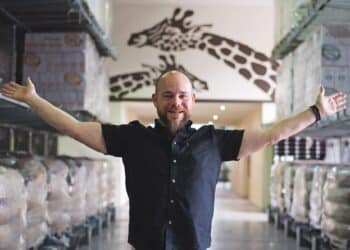
Head of McCafé Jared Chapman on his full-circle career, changing the recipe of one of Australia’s most consumed coffee blends, and the symbiotic relationship between the brand and independent coffee culture.
With 1053 stores across Australia, more than 515,000 coffees served each day, and a partnership with a Melbourne roastery producing 3200 tonnes of coffee per year under his stewardship, one major slip up from the Head of McCafé could ruin the mornings of one in five of the nation’s coffee drinkers.
Yet, Jared Chapman, who’s been in the job since November 2024, is rather level-headed about the responsibility that comes with his role. His more than 15 years of experience in almost all areas of the Aussie coffee industry – from barista to trainer to sales manager – provides a fount of knowledge to fall back on and a deep understanding of what people look for in their morning cup.
It was, in fact, at McDonald’s – and later McCafé – that Jared started his working life.
“Like most people in coffee, I came into the industry by accident. I started out flipping burgers while I was in school and then learned to make coffee. McCafé was very different back then. We used two-step machines and there wasn’t much understanding of the importance of freshness,” Jared tells BeanScene.
While crafting a cappuccino at McCafé in the late 2000s looked very different to how it does now, Jared continued working in the industry alongside his studies, refining his barista skills at independent coffee shops. Later, he deferred a year of his degree in science to take up a role as a barista trainer at Cerebos, and by the end of that year coffee had firmly taken root.
Science’s loss was coffee’s gain. Over the next decade and a half, he progressed through the industry at the likes of UCC and Barista Equip before heading up McCafé in Australia. Being immersed in Australian coffee culture through some of its most pivotal years, Jared has witnessed some of its most significant highs and lows.
“The coffee industry is very different today compared to when I started. The biggest shift has been the accessibility of amazing coffee. Previously, you really had to seek out a great cup, especially if you were in a regional area,” he says.
“The specialty sector has raised the bar for all venues serving coffee and now you can find quality coffee pretty much anywhere. The larger players have been forced to raise their game, and that’s resulted in quality being much more accessible.”
An Aussie success story
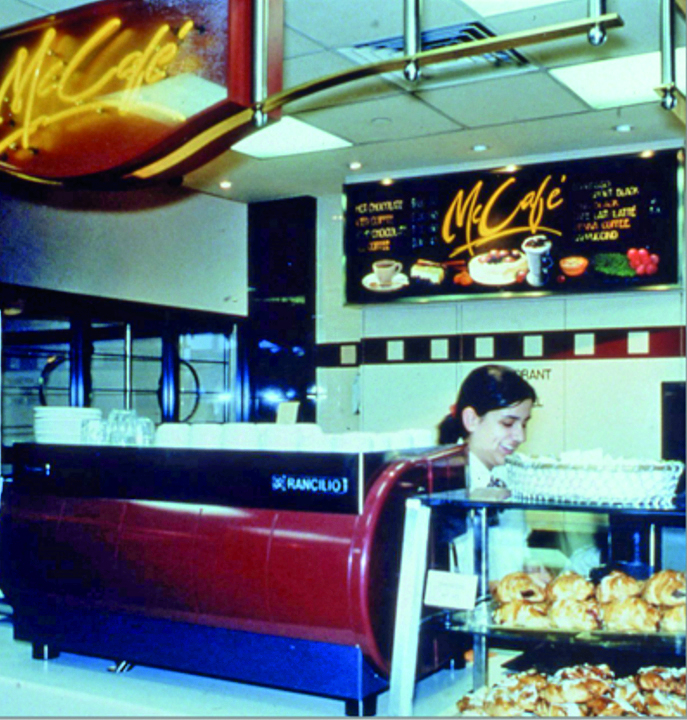
McCafé, according to Jared, is a great example of this. Conceptualised and launched in Melbourne in 1993 in response to the rising popularity of espresso, the McDonald’s sub-brand is an Aussie success story.
In 2001, the fast-food group took the idea international, opening the first store outside of Australia in Chicago, Illinois. By 2003, McCafé was Australia’s largest coffee chain and today there are more than 4000 stores around the world in 60 countries.
“While McCafé was inspired by early Australian coffee culture, over the past three decades it’s also influenced coffee culture here in a big way,” says Jared.
“Take drive-thrus, for example. While the concept existed in pockets before, McCafé has been instrumental in bringing the element of convenience to coffee, at the same time as pushing boundaries of quality.
“In terms of accessibility to quality coffee, it’s a great example of how standards have come a long way. The brand has had a big influence on coffee drinkers’ willingness to accept that coffee from a big chain can be good. We have baristas who are really passionate about the drinks they craft.”
A major step forward in McCafé’s pursuit of a quality cup was swapping two-step machines for traditional group-handle espresso machines in 2012. More recently, the chain has embraced automated technology, something Jared has witnessed throughout the industry.
“Automation has done wonders for consistency, not just at McCafé but across the coffee sector. For us, introducing elements of automation to our group-handle setup helps the barista create a more consistent product, which is essential for us as a business – whether it’s automated bun toasting or coffee grinding,” he says.
“It also enables us to deliver drinks at a speed that’s expected of our restaurants. During peak times, the team are under pressure to dispense orders to a queue of cars or customers and that’s where automation can help. At the same time, the products still need to be crafted with a level of care and passion.”
Despite McCafé’s shift towards automation, Jared still sees some resistance to the new technology in a few areas of the industry.
“Compared to markets such as Europe, in Australia I think there’s still a way to go with embracing automated technology and equipment in coffee preparation. In places such as London, a lot of larger specialty coffee groups are using automated machines to ensure consistency and there’s an acceptance of that from customers,” he says.
“I think the wider coffee industry here will probably come around to it. It reminds me of when the Puqpress was first introduced about 10 years ago. Initially, people had a real resistance to the change, and many thought it was removing an element of craft from the barista’s role. But they pretty quickly moved past the reluctance and saw the benefits for the coffee drinker.”
Barista training ground
Despite an increasing integration of automated technology, Jared says barista training is still key to McCafé’s coffee strategy. The company has five barista academies around the country where key members of staff across its network are trained as barista coaches.
“Each restaurant has a barista coach to ensure the team producing coffee have the foundational skills and knowledge to know what it takes to be a great barista. It’s also important for them to know where the coffee comes from and the processes behind it,” he says.
“These barista coaches are in the venues every day, so they can also monitor quality and educate shoulder-to-shoulder with other baristas.”
Like Jared, many people in the industry started their coffee journey behind a machine at McCafé. He says the barista academies are a great source of foundational comprehension and experience on which careers are built.
“The industry is littered with people who started their careers at McCafé. There’s a perception that our baristas might not have the same skills of those outside the company, but I’m on the ground talking to these baristas every day and that’s just not true,” he says.
“They’re really excited to learn about coffee and passionate about what they do. After working with us, they often go on to have careers in coffee, and that’s great for the broader industry.”
It’s all in the blend
As part of McCafé’s focus on quality and consistency, over the past year Jared and team have been working on a new blend for the 188 million cups of barista-made coffee it serves each year. The blend, which is roasted at its Melbourne facility, is updated roughly every three to four years – a process that isn’t taken lightly.
“We regularly ask our customers what they think about our coffee so the process of updating the blend is very much customer led,” he says.
“There’s no set time frame for when we change the blend – it comes down to when we get feedback that there are improvements to be made as flavour preferences evolve.”
In the lead up to the most recent evolution, through research the team identified that McCafé customers would like more flavour through the blend and less bitterness. After adapting the recipe, they then tested it with a group of consumers before releasing it to market.
“The new blend is made up of beans from Colombia, Brazil, Honduras, and Ethiopia. The reaction so far has been really positive,” Jared says.
Roasting thousands of tonnes of beans each year, McCafé isn’t immune to the volatile nature of the coffee market. Sourcing at such vast volumes means contingency plans are essential.
“Supply continuity is a key consideration for us. We try our best to buy coffee at the right time and secure enough volume to create supply security, but having contingency plans – whether that’s supplementing stock or adjusting the blend – are always in place behind the scenes,” Jared says.
“Working with our roasting partner UCC, we’ve been very lucky over the past few years that none of those contingencies have needed to be implemented.”
While recent volatility in the market has sparked many conversations about the price of a cup of coffee in Australia, Jared says McCafé has been able to limit price changes over the past couple of years.
“Macca’s has a commitment to great quality and great value and that extends to customers who are treating themselves to a coffee at McCafé,” he says.
“That commitment is especially important in today’s cost-of-living environment.”
Like many hospitality venues, McCafé has felt the effects of the shift in customer purchasing habits and the increase in coffee drinkers turning to at-home options. Despite this, Jared says they are starting to see green shoots.
“As customers cut back on discretionary spending, the expectation lifts on when they do spend money. They have higher standards and we need to deliver on them, because otherwise you risk losing that customer as they are less forgiving. Currently, our biggest focus is on creating that quality, convenient experience,” he says.
“The cost-of-living pressure is now starting to ease and we’re seeing a lot more positivity in the market.”
Cappuccino is king
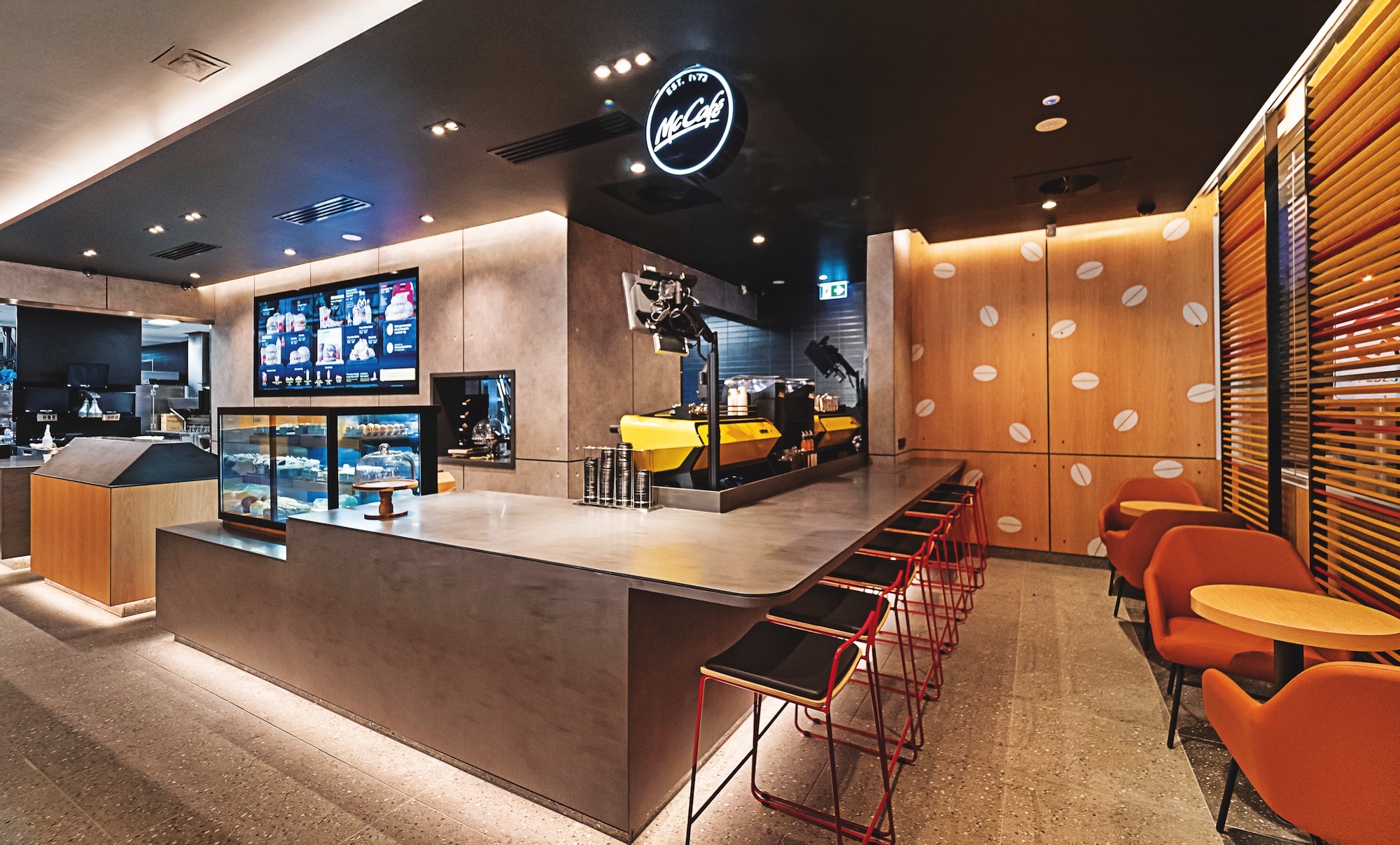
While the most ordered coffee serve in Australia is said to be the latte, at McCafé the cappuccino takes that crown. The core menu stays consistent throughout the year, but the company taps into industry trends with a line of limited-edition drinks.
“We’re keen to keep our finger on the pulse of what’s happening in the sector. Offering limited-time beverages that tie in with current trends are great at driving awareness and creating a halo effect on the broader range as well,” Jared says.
“The interest in chilled coffee continues and as a result last summer we had a very successful campaign with our Toffee Nut Iced Latte and Almond Flavoured Iced Latte.”
Matcha is one café trend that doesn’t appear to be waning. As such, in May 2025 McCafé launched a limited-edition matcha range, including an Iced Strawberry Matcha Latte, as a trial in selected stores.
“The cold beverages and iced coffee categories are growing very quickly for us, so it’s an area we will continue to innovate in. We’ll see how the trial goes and whether it continues to be an ongoing area of focus for us,” says Jared.
More broadly, Jared is optimistic about the future of the coffee industry in Australia, although he believes its structure may continue to be more fluid.
“There tends to be periods of when new cafés open, followed by periods when a lot of them close. There are cycles of consolidation and expansion, and I think that’s what we’re witnessing at the moment,” he says.
“Drive-thru coffee is starting to gather momentum and, unluckily for us, that’s bringing more competition as everyone is now looking to do it. But it’s a good business model, so I see why lots of coffee chains are following our lead.
“I think the democratisation of quality will continue, which is ultimately a fantastic thing for Australian coffee culture.”
This article appears in the August 2025 edition of BeanScene. Subscribe HERE.