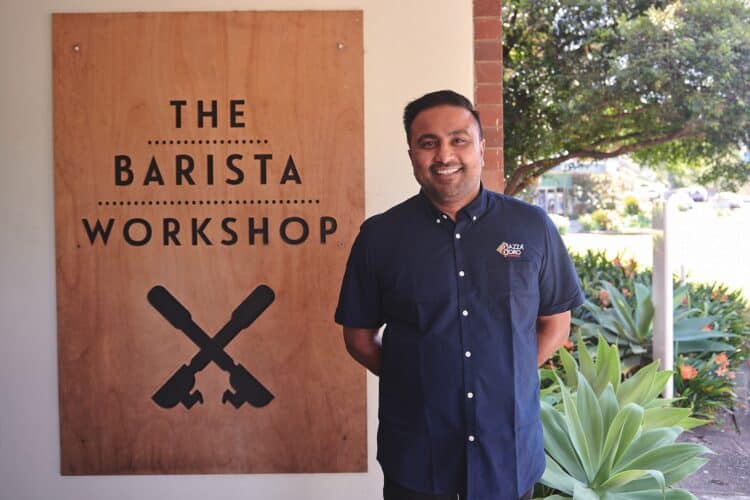
Shaun Kumar, JDE Peet’s Coffee Ambassador for Australia, gives some top tips for choosing the right blends for your café.
Knowing your core customer is the secret to every café’s success, according to Shaun Kumar, JDE Peet’s Coffee Ambassador for Australia. Everything boils down to this, and armed with this vital knowledge, you can confidently progress to choosing the right coffee blends to match your clients and your café’s vibe.
“The first thing is to know your customer and it’s really important to know your core clients,” Shaun says. “Are you in the CBD and they’re office workers who want a fast, consistent takeaway coffee, a casual grab and go place?” Shaun says.
“Or are you in a suburb where people have more time to sit and chat, enjoy more of a café experience and a meal which might come with repeat coffees?”
A second important component is knowing what vibe the café owner wants and how they want their staff to run the coffee program.
“Is it going to be a quick takeaway which means you might offer one really good milk-based coffee, and that same blend you would do as milk in a black – so that’s your vibe,” Shaun says. “Or are you going to offer single origins, filter coffee, a batch brew?”
Shaun believes café owners should avoid making the mistake of copying what everyone else is doing. “When it comes to choosing your blend, there needs to be a bit of differentiation to help a customer choose your café over someone else’s,” he says.
Sustainability and recyclability also come into the mix, he adds. Some may want to feature an origin blend like Guatemalan, Central American or African.
Clients of cafés in youthful dynamic suburbs such as Sydney’s Newtown or Melbourne’s Fitzroy, for example, may prefer beans that are responsibly sourced. He advises cafés to proudly display this information to let consumers know they are doing something good by buying this blend. JDE also provides cafés with display materials to showcase this information.
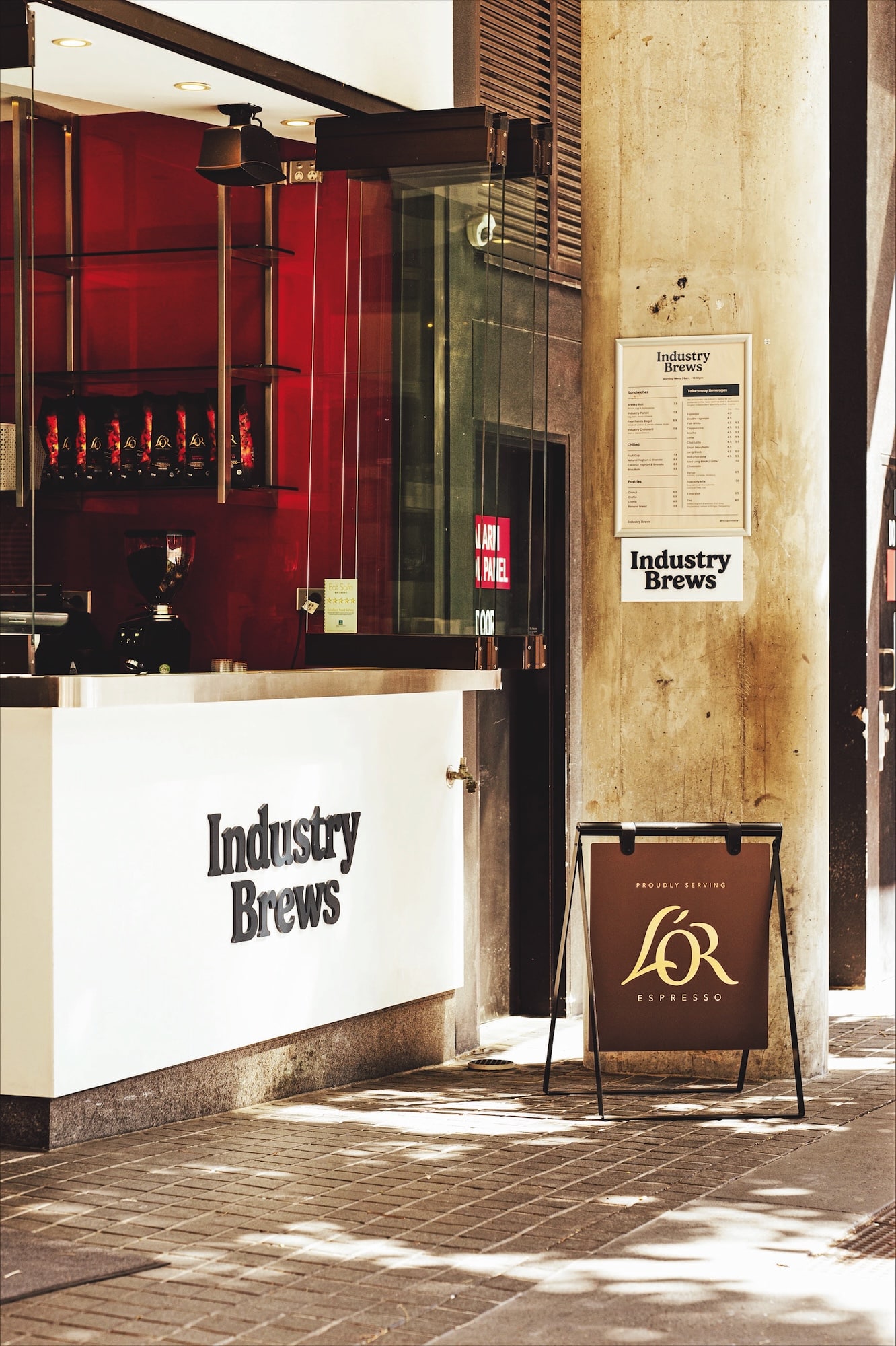
“Beans sourced through JDE’s global program, Common Grounds, can be part of various community projects,” Shaun says. “For a café in these areas, this would be part of the vibe you’re going for.
“These things can make your café stand out; if you have signs showing your $5 coffee is being responsibly sourced and helping communities in Africa, versus a $5 coffee in the next venue with no mention of that and no compostable cups, where are people more likely to buy their coffee from?”
JDE is big on sustainability and was the only coffee company ranked in Time magazine’s top 500 most sustainable companies worldwide in 2025.
Another thing to consider when choosing blends is cup type.
“Are they aqueous biodegradable takeaway cups or porcelain cups because coffee tastes different in certain vessels?”
The same coffee will taste different in four different cup types, he adds.
Roast profile, blend components and the base should be considered when making blends. While darker coffees are generally designed to blend with milk better because they have more cut through, lighter coffees are better served as black coffee.
Brazilian coffee, for example, is generally a base and gives the rich profile of a chocolate, nutty flavour. A medium to dark roast blended coffee would be suited to cut through the milk.
“If you’re serving 90% or 80% milk-based coffees, you need to cater for a blend, as opposed to a single origin,” he stresses.
“JDE’s Campos, Piazza D’Oro and L’OR are predominantly designed as a blend because they’re designed for milk-based coffee drinkers.”
Campos Superior, JDE’s flagship superior blend, is what Shaun recommends for milk coffees, but it can also be used for black coffee. Piazza D’Oro’s Mezzo is the most popular Piazza D’Oro blend, and single origin Colombia and Dolce blend can be used for black or milk coffee.
“We’ve got a whole range between blends and single origins so we can cater to everyone, depending on what the café is looking for,” he says.
Most cafés generally have milk orders going to a blend and black coffee orders coming out of the single origin. The milk coffee range normally stays the same to maintain consistency as clients keep coming back for a consistently good coffee, Shaun says.
Black coffee origins change regularly with seasons and harvest cycles which keeps customers engaged. Currently JDE has six single origins such as Tanzania, Kenya and Colombia.
The taste profile for Piazza D’Oro’s Mezzo is milk chocolate, caramel and toffee, all through the milk while for Campos Superior it’s rich caramel butterscotch and sweet red fruits.
“Both of these coffee blends are responsibly sourced and part of Common Grounds,” Shaun adds. “The choice might come down to taste testing by café owners and baristas.”
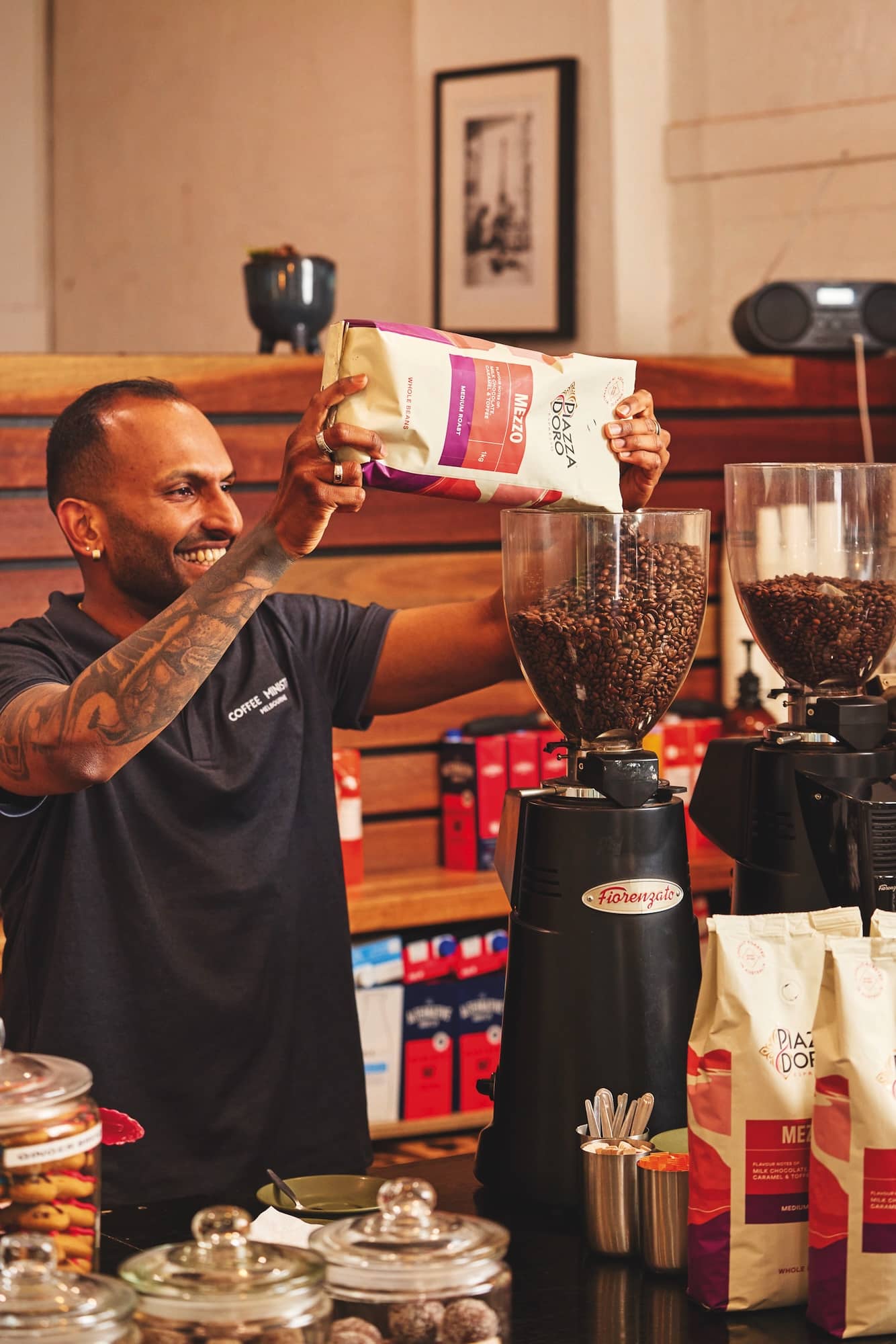
in mind is vital when
selecting blends. Image: JDE Peet’s.
Hopper and milk management
A new blend launched at the start of 2025 – L’OR Intense – which JDE is looking to expand, brings something a bit different. It’s an intense espresso roast and a full-bodied blend with chocolate and butterscotch.
“This L’OR blend is popular with clientele who prefer a bit more of a robust coffee to sit on and perhaps just have one at breakfast,” Shaun explains. “Office workers prefer medium to dark coffee and this is where cafés need to pick their blends, because if you have someone who enjoys two coffees, you want to give them a mellow kind of profile.
“They might have one before they order breakfast and another later. It’s all about maximising your returns, so you want to be able to sell each person two cups of coffee.”
When it comes to keeping coffee as fresh as possible once bags are open, Shaun advises ensuring the hopper is filled first thing for the morning trade which is better for workflow. Come the mid-morning lull, baristas should not top it up as much, perhaps only doing half top-ups, so the coffee stays fresher every time it is ground. Around 3pm, he advises filling the hopper again for the afternoon rush.
Once a coffee is ground, within 10 seconds it starts to lose its aroma and become a bit flatter, Shaun says.
“It’s important to ensure your hopper is filled, but not full throughout the day, to manage your flows,” he says. “Also important is storing your coffee after you close. JDE partners with Airscape stainless steel canisters which seal tight, so no air gets into the coffee beans. They should be kept in a cupboard or dark place. The number one issue for coffee is oxygen.”
JDE’s coffee is also nitrogen flushed when it goes through packing and this is part of its standard offer across all products to
keep them fresh. As nitrogen is heavier than oxygen, flushing it when the coffee goes in helps protect it from oxygen.
“It’s similar to opening potato chips which are crisp at first but become soggy and stale if the packet’s left open,” Shaun says.
While there are many dairy alternatives, Shaun recommends having four milk/non-dairy options: a staple cow’s milk, an oat milk, soy milk, and another alternative such as an almond milk.
Having too many milk alternatives makes it too hard to match them with coffee blends, he says. “You’ve got to work out what works for your coffee. This is important because if you get coffee that’s too light, sometimes it’ll react with oat milk or alternative milks,” he adds.
Lighter coffees have more acidity, making the coffee react to the milk and split.
“Do a taste test and work out what works for you. This is where JDE can assist; we can advise what partners well with our coffee,” Shaun says.
“We’ve got a team who is constantly testing because it’s seasonal and we’ve got customers nationwide. They’ve all got different choices, use different brands, and we want to make sure that the coffee is coming through more prominently than the milk.”
Marketing is also key and JDE provides umbrellas, A-frames, wind barriers and tailors bespoke loyalty cards.
Benefits of choosing blends that can be provided year-round, rather than special releases, create consistency because customers want that repeat, great tasting coffee. Stock simplicity is essential for running a café, as is training, and both assist speed of service. The barista who is trained on milk knows what the coffee tastes like, but if it keeps changing, they’ll need to keep retraining.
Again, flavour notes depend on your customers. If the café is in a gym, most coffees will be black, as they might have a protein shake added.
“The beauty of JDE,” says Shaun, “is that we have a range – you can pick and choose to suit everyone.”
For more information, visit piazzadoro.com.au
This article appears in the December 2025 edition of BeanScene. Subscribe HERE.