As cafés balance convenience and compliance, Pakchain is helping venue owners fill many important sustainability gaps with their takeaway service.
As consumers grow more conscious of the downstream effects of their purchasing decisions, they are choosing to buy from businesses prioritising sustainability. From the switch to paper straws, to discounts for customers who bring reusable cups, the coffee industry is embracing this trend – cognisant that it’s good for business and the planet.
The shift from plastics – to compostables and recyclables – has not been without resistance. Right or not, some consumers initially viewed new alternatives as inconvenient or less durable. Over time, however, acceptance has grown, particularly as bans on single-use plastics have become standard across several states. Many now recognise that small trade-offs in convenience contribute to broader environmental benefits.
But what if there was a company helping to bridge this gap?
Understanding this is Paul Rayner, Founder of Pakchain, an Australian sustainable packaging solutions company that works closely with cafés.
“Not everybody is willing to carry around a reusable coffee cup,” he says. “There’s a convenience factor around takeaway packaging.
“Pakchain is able to fulfill customer and market requirements with our broad range of products suited from eco-minded café owners through to more budget-conscious operators.”
Despite the barriers, Paul highlights the importance of having the customer in mind as the first step in tackling environmental issues. This means finding realistic sustainability solutions that exceed quality expectations while remaining affordable – a tough balancing act, but one he believes he has achieved after founding the company in February 2024.
For more than a decade prior to this, Paul has worked to help the foodservice industry with extensive experience operating Vegware Australia, a compostable packaging brand. He has guided cafés, restaurants and businesses towards packaging that balances practicality, compliance and environmental responsibility.
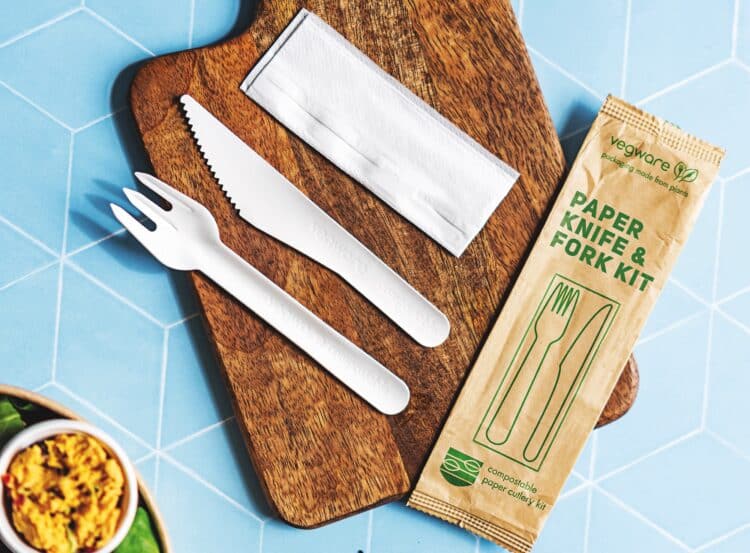
This experience was the impetus for Pakchain – to fill product gaps and respond to specific needs in Australia. The company provides a broad mix of packaging options, from compostable cups and paper cutlery to recyclable alternatives, allowing café owners to find the right fit for their operations and budgets.
Diversifying with compostables
Even with a shift to reusables, not all businesses can or wish to rely entirely on one solution, and Paul recognises that flexibility is key.
“There’s room for both reusables and single-use packaging,” he says.
Pakchain’s products are designed to meet these differing needs, creating space for both reusables and compostables to coexist.
Whether it is a café serving high-volume takeaway coffee or a caterer managing single-use requirements at events, the company focuses on providing compliant and eco-friendly solutions that avoid compromising performance.
Navigating the challenges of single-use products, Pakchain’s compostable solutions are designed to be processed in industrial composting facilities together with food waste.
Made from plant-based materials, they replace conventional plastics – and can also be composted at home. By using compostable bioplastics such as polylactic acid (PLA), plastic in coffee cup linings or deli containers can be eliminated. Another example is bagasse, a reclaimed sugarcane fibre. This by-product of sugar manufacturing replaces plastic or polystyrene for takeaway packaging.
Paul explains that compostables are a sustainable way for cafés and roasters to meet consumer demands while balancing regulations and brand reputation. By having the end life of the product in mind, Pakchain aims to elevate the industry through solutions that serve both the brand and the environment.
“We have an affordable solutions-based product backed by outstanding service,” Paul adds.
Tackling food contamination
A critical challenge in packaging disposal is contamination from food residues. Plastic or mixed-material packaging requires consumers to rinse or separate components, which often does not happen in practice. Contaminated waste can disrupt both recycling and composting streams, resulting in incineration or landfill.
With compostables, food contamination is no longer a barrier – it becomes part of the composting process.
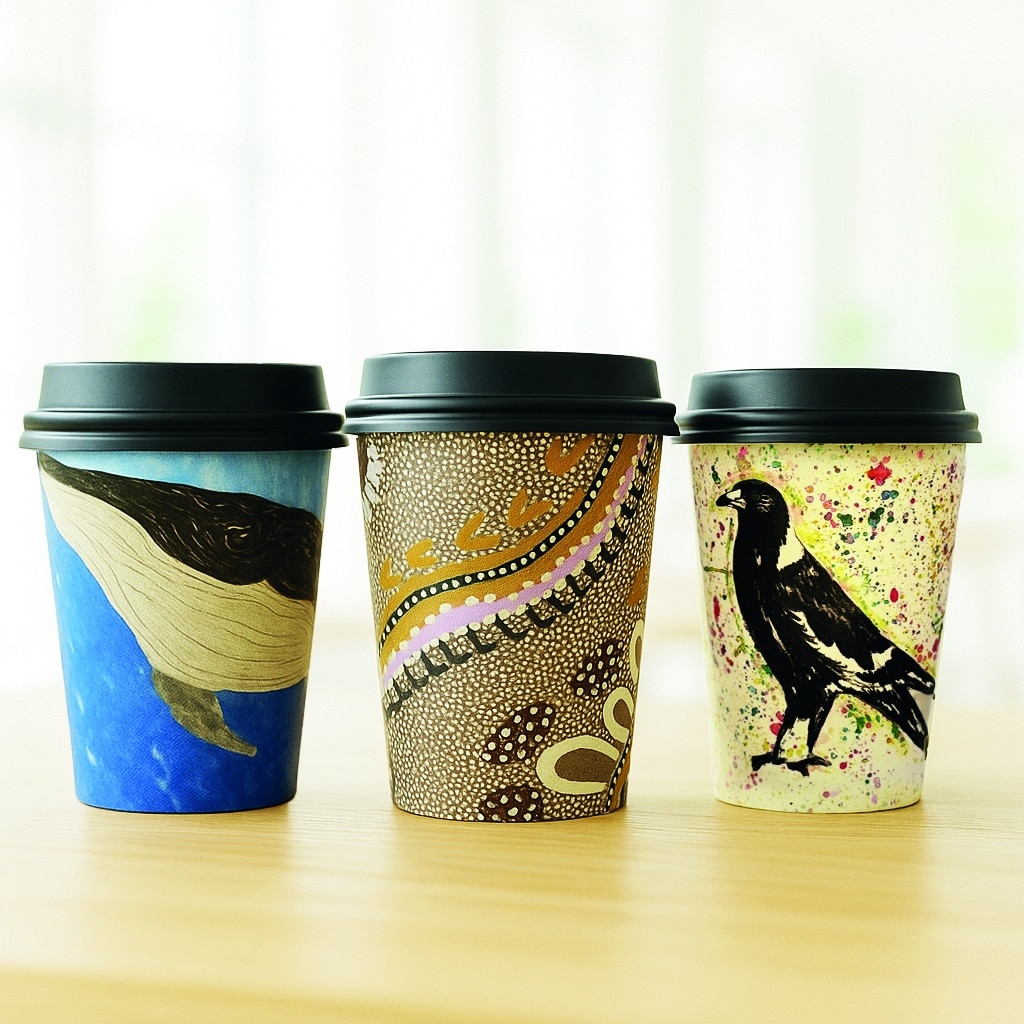
“We have Australian certification home compostability for products like our ‘Gallery’ Single Wall coffee cups,” says Paul, adding that the company also manufactures Double Wall cups.
Pakchain’s certified home-compostable materials are designed to break down alongside organic matter, including food waste. By mitigating contamination where possible, it simplifies separation at the end of service. As mentioned, the company’s single-wall coffee cups feature a water-based lining rather than plastic, making them suitable for home composting under Australian certification standards.
By investing in improved materials such as aqueous coatings, Pakchain aims to create products that are easier to return to the environment safely.
Reducing contamination risks within the waste system is part of the company’s commitment to considering the product’s end-of-life, contributing to a circular and sustainable economy.
Although the use of these materials is beneficial, there is room for improvement through broader composting infrastructure, clearer labelling and education for both baristas and consumers.
Paul says the company works to educate customers about its products through trade shows and insights shared across its website and social media. The aim is to push the foodservice industry forward in a sustainable direction.
“As far as education goes, we use many platforms to bring awareness of our compostable products,” he says.
He notes the packaging industry has matured considerably since the early days of compostables. What was once a niche offering has now become mainstream, driven by legislation, innovation and changing consumer expectations. Paul expects compostable products to continue improving in quality and accessibility.
“The technology around the materials – such as aqueous lining and other coatings being developed or tested – will continue to progress and improve from an environmental standpoint,” he says.
The next frontier, he says, lies in refining coatings and materials to ensure durability without compromising compostability, as well as expanding infrastructure for organic waste collection. As technology advances, products will degrade faster and more completely, supporting a stronger circular economy.

A flexible approach
But that doesn’t mean recyclables have lost their relevance. While compostable materials are surging in popularity, Pakchain offers recyclable packaging such as RPET cups.
“One of the reasons we started Pakchain was to have a product mix suited for businesses that lacked the budget for compostables,” Paul says.
Australia already has an established recycling system for materials such as RPET used in soft drink bottles and other consumer goods. For many customers, recyclable products can be a more accessible starting point when budgets or local composting options are limited. This dual approach allows Pakchain to meet customers where they are, as the company recognises that sustainability is not a single path but a collection of options that reduce environmental impact.
In practice, that flexibility is vital. For Paul, the goal is not to choose between one or the other but to provide a range that keeps pace with market and regulatory demands.
This means that in states where both PLA and RPET cups are banned, sustainable paper offerings are also available. The diversification of its product range, in turn, creates a resilient system.
Supporting the shift
The packaging landscape is in constant flux, guided by compliance, shaped by innovation and supported by consumer acceptance – making it a challenging world to navigate for café owners and the foodservice industry.
With real, everyday solutions for the foodservice industry, Paul says Pakchain’s mission is practical rather than theoretical. Its approach recognises that sustainability is a process of transition rather than a single leap. Through an expert team and extensive knowledge, the company is well placed in supporting the industry through the journey of sustainability.
“Compostables are expected to become a standard in the foodservice industry,” says Paul. “Our compostable and recyclable solutions are there to help businesses switch to eco-friendly packaging.”
For more information, visit www. pakchain.com.au
This article appears in the December 2025 edition of BeanScene. Subscribe HERE.