La Pavoni on combining timeless design, innovation, and tradition to produce equipment that stands the test of time.
They say looking back keeps you from moving forward, but at La Pavoni celebrating designs from the past and blending them with contemporary concepts is exactly how the espresso machine manufacturer stays ahead of the curve.
From the company’s beginnings in a Milan workshop in 1905, when Desiderio Pavoni invented the portafilter holder, to the new Diamantina espresso machine almost 120 years later, very little – yet so much – has changed.
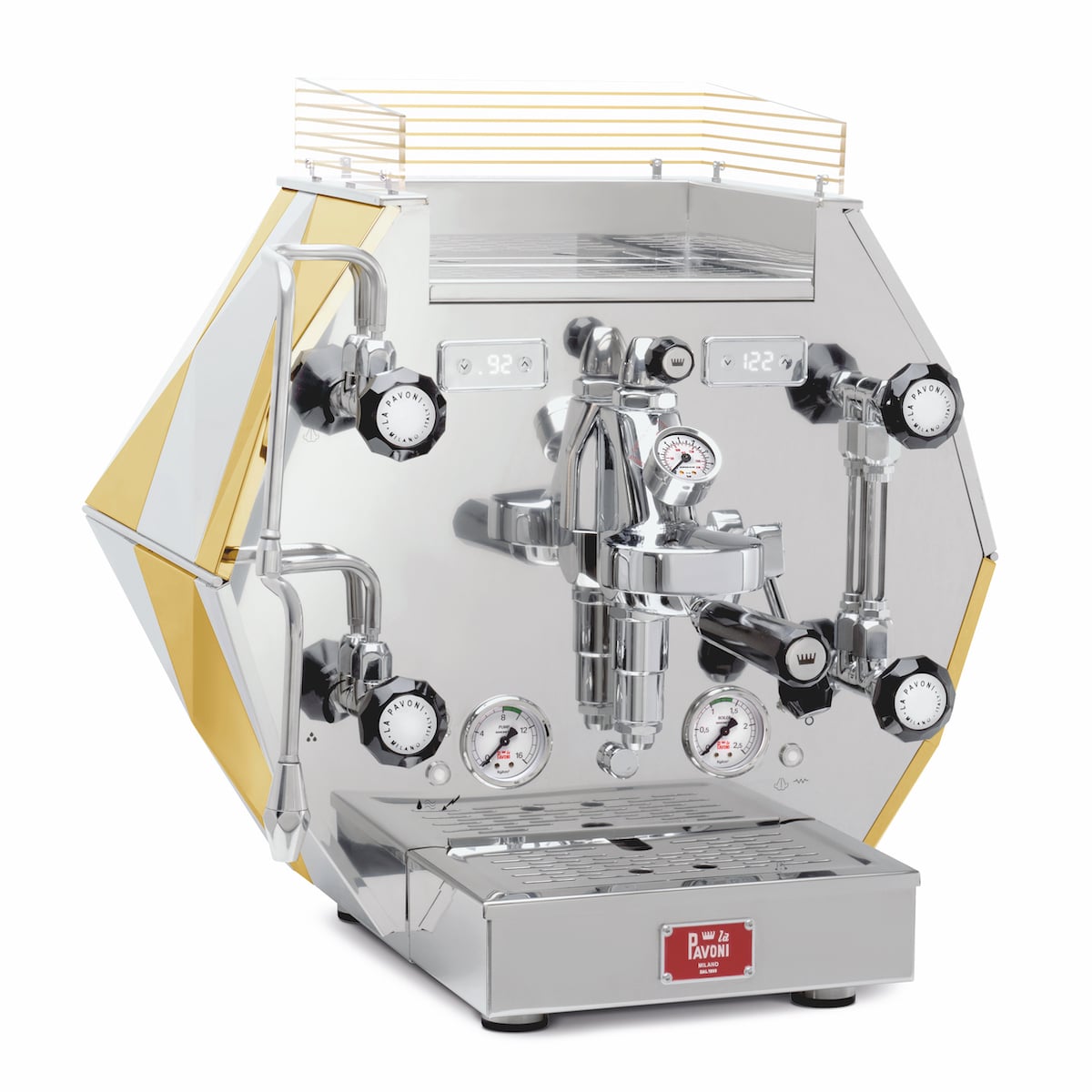
In its latest iteration of staying faithful to unbreakable design principles, La Pavoni has reimagined the timeless Diamante espresso machine, entering its craftsmanship into a new era. The result is the Diamantina, which has kept the design essence of its predecessor while meeting the demands of today’s coffee aficionados.
Described as a period piece, the Diamante has a rich history dating back to the 1950s, riding the technological ebbs and flows throughout the decades while holding its original design.
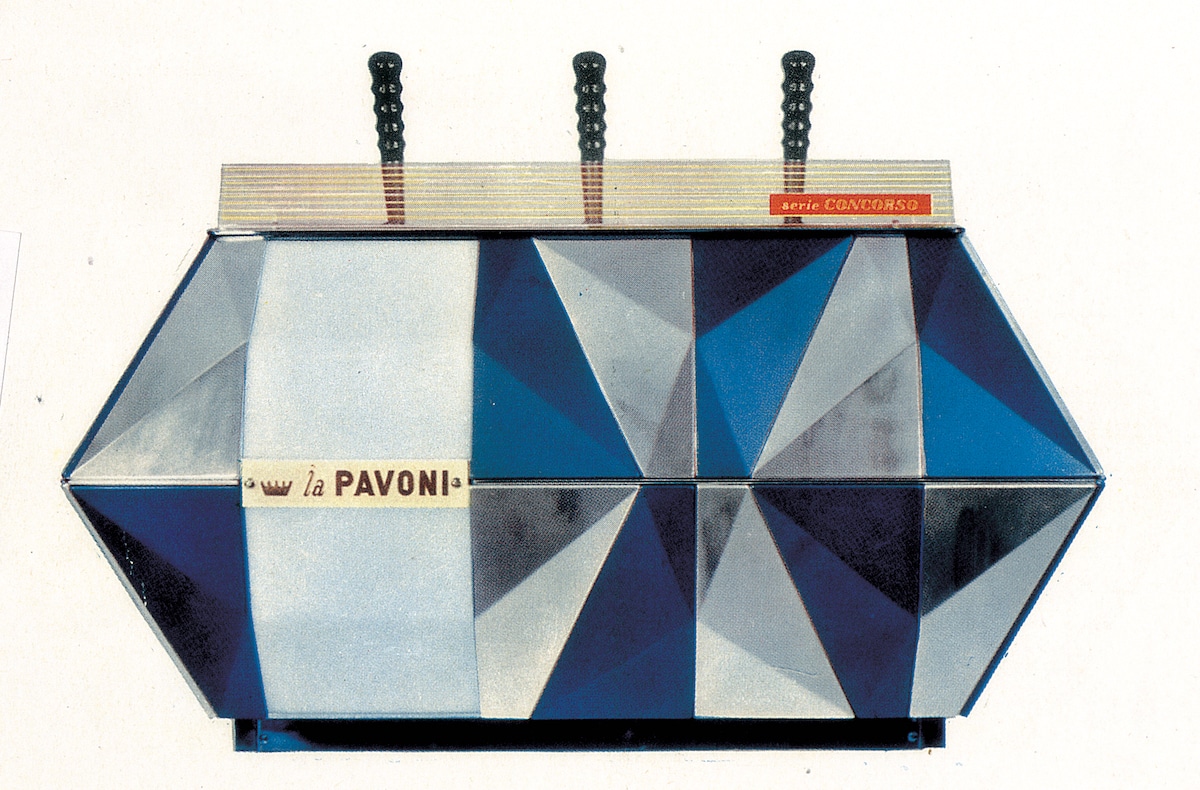
The first iteration of the Diamante – the Concorso – was born from a competition open to all Italian engineers, architects, and designers. Developed by Bruno Munari and Enzo Mari, the body was designed with its iconic modular geometrical parts that enabled the building of machines with more than one group.
In the 1970s, it was reborn from the creativity of two Italian designers as the Diamante – the traditional lever espresso machine.
Leon Wolf, General Manager at Smeg Professional and La Pavoni, says history and innovation have come together in all the machine models the company presents within the market.
“The new Diamantina, however, is the protagonist of the collection,” he says. “The machine embodies all the technology from our top of the range products in its design. It really is the jewel in our crown and the diamond in our range that halos the rest of our products.”
According to Carmelo Corallo, National Sales Manager of Coffee Machine Technologies, a distributor of La Pavoni machines, there’s a romance that’s unique to the Diamante. He says his admiration for it has not faltered since his first exposure to the coffee world as a child.
“A lever machine has simplicity and elegance to it. I grew to love it when my dad used to take me to his local bar when I was five or six years old, and they were using those styles of coffee machines,” he says.
“My dad would get an espresso before work every day. The coffee maker would pull the lever and I was in awe of watching these things move.”
The latest iteration of the Diamante is a commemorative piece to demonstrate how espresso was pulled in this era. Available as automatic and semi-automatic to appease the time-poor consumers of today, as well as a lever model that honours original design with no pumps, motors, or electronics.
“I still think pulling an espresso from a lever machine is probably the best way to do it,” Carmelo says.
The appeal to the machine, he says, is akin to classic vehicles with a beautiful simplicity in their design. Leon agrees, saying the designs of classic cars stand the test of time.
“It’s not like you have to continuously change the product. You might change the technology in it, but the overall look, feel, and structure of the product remains the same because it is still appealing today as it was back in the 1950s,” he says.
Now, Carmelo celebrates the Diamantina, which is proudly on display in Coffee Machine Technologies’ shopfront window in Melbourne.
“People see it in the window and are often drawn in by the unique design and ask, ‘What is it?,” he says.
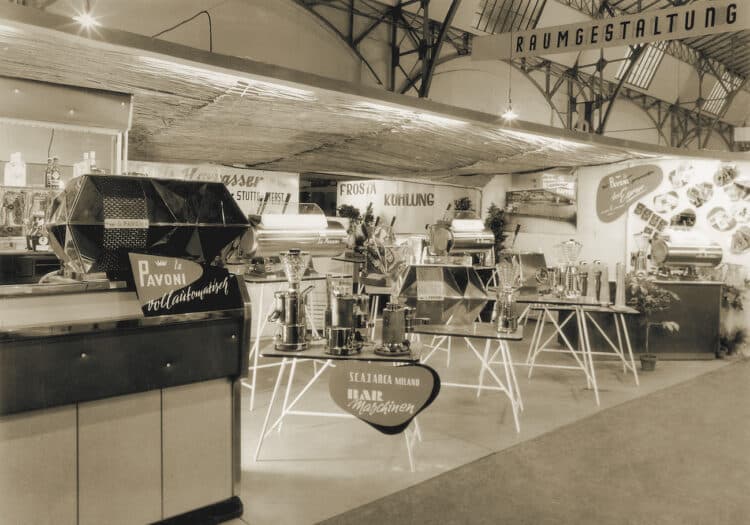
“I cherish the old photos of workers in factories making machine components; it’s a beautiful reminder of our history. I want to honour that legacy by bringing it back to light as a commemorative tribute.”
The Diamantina features a design that reflects its classic roots, with the technology that meets the demands of modern consumers.
It is designed for customers who want to explore more with their coffee, because today, unlike in the 50s, 60s, and 70s, there are a wide range of coffee flavour profiles with light roasts, medium roasts, and dark roasts. Therefore, to extract coffee, different temperatures are required. Further adding to this complexity is the alternative milk market.
The Diamantina features a dual boiler, while the Diamante is a single boiler heat exchanger. The successor has a rotary pump and a removable 2.9-litre capacity water tank, so users can make back-to-back shots all morning without worrying about refilling the water.
“In those days, there was no such thing as an alternative milk. You had milk or you had milk,” says Leon. “Today’s consumer has a large choice of options when it comes to the type of coffee that they want, the flavour profile they’re looking for, and then the milk or the milk alternative they use.”
He adds that the temperatures within the dual boiler and the dual PID system of the Diamantina come into play for today’s customer, especially with all the choices they have to make.
“I think the biggest challenge when designing a product of this nature is wanting to give the barista, or the home barista, every possible option using the latest technology. When people talk about a coffee machine, the simplest thing they want to know is, is it a single boiler, dual boiler, or heat exchanger? Is it a PID or is it a thermoblock?”
Leon says when the Diamante was created, nobody knew the origins of their coffee, with flavour profiles not being as important as they are today.
“Now, with the evolution of coffee, people won’t buy it unless they know the origin or the farmer,” he says. “They want to know the story behind it. And I think people connect to a brand and a product because there’s a story behind it, just like they connect to coffee itself.”
As for what the future looks like for La Pavoni, Leon says the company just needs to refer to its past.
“The company will continue to reimagine its classic designs, so that we can continue for an additional 50, 60, or 70 years,” he says.
“We will keep our models relevant, so they continue being icons moving forward.”
For more information, visit lapavoni.com
This article appears in the December/January 2025 edition of BeanScene. Subscribe HERE.