Regular coffee machine maintenance is vital to ensure cafés run smoothly without any downtime. Coffee Works Express shows why good habits and training matter.
What’s better – a visually striking flat white that leaves a bad aftertaste or a simple long black with no faults in its flavour? Most choose the latter.
At the heart of any café beats a good coffee machine. Keeping that pulse steady is a barista, crafting consistent and aromatic cups of coffee. Marketing manager at Coffee Works Express (CWE) Natalie Kollar identifies the elements that make or break the experience.
“To consistently make fantastic coffee, there’s a formula,” she says. “Well maintained equipment, a well-trained barista, superb water quality, and the perfectly roasted beans.”
But, according to Natalie, a single missing element affects the quality of the cup. While coffee-making skills are essential to delivering satisfaction for daily customers, the foundation lies in a healthy machine.
“Regular coffee machine maintenance is a critical element to making great tasting coffee,” Natalie adds.
Despite this, maintenance can slip down the list of priorities once the morning rush takes over. For the team at CWE, that’s a habit worth breaking. With nearly three decades in the coffee industry – from barista and café owner to trainer and café flow designer – Natalie takes pride in knowing that clean machines make better coffee.
She says a well-maintained machine produces coffee that is balanced, smooth and consistent. Neglecting maintenance can lead to problems.
“A dirty, unmaintained coffee machine leads to bitter, burnt, ashy tasting coffee,” she says.
Not only does poor maintenance change the flavour of coffee, it can also affect milk quality and hygiene caused by contaminated boilers. Bitterness and sourness are warning signs that something inside the machine is not working as it should.
Beyond flavour, poor maintenance can put strain on a machine’s performance. When group heads leak, boilers clog, or temperature fluctuates, consistency suffers – and damaged machines can become irreparable. For cafés that pride themselves on quality and reliability, those small technical issues quickly become expensive and reputational ones.
Loving the machine
To love the craft means to care for the tools that sustain it. For baristas, it means taking a genuine interest in the machine and getting to know it. By staying attentive through regular checks, the delivery of quality coffee can remain consistent. A single lapse can lead to common mistakes such as not changing water filters at the correct intervals or skipping daily chemical backflushing.
When these small routines are skipped, the build-up is gradual but damaging. Oils, milk residue and scale can accumulate, making the system work harder and altering temperature stability. Over time, extraction becomes unpredictable and coffee loses its clarity of flavour.
“A good barista is in tune with their machine, and they know the effect that good maintenance plays on in-cup quality,” Natalie says.
She notes that poor-quality water, and neglecting grinder cleaning and calibration, are often overlooked. Natalie encourages baristas and café owners to have a consistent plan to prevent further damage. With a strong understanding of machine care, even the smallest act of maintenance goes a long way in safeguarding the business.
“From intermittent backflushing, wiping down the steam arms, to end-of-day group head cleaning, the barista knows what is needed to produce great coffee time and time again,” says Natalie.
But what happens when equipment breaks down?

The driver and the mechanic
Natalie paints a picture: the barista as the driver and the coffee machine as the vehicle. No matter how well trained and knowledgeable the driver is, they still require a mechanic who can replace worn parts and help the engine run again.
“A technician is like the mechanic,” she says. “They know what to do when something goes wrong and can fix the problem.”
As part of CWE’s sales and service support team, Michele Cavina adds that the barista is the “first line of defence” in every café. Supporting the baristas are the technicians who handle the deeper work, from water filtration checks and internal descaling to pressure calibration and replacing worn parts. While a barista can keep a machine running day-to-day, a technician ensures that it continues running for years.
However, in too many cafés, CWE finds that service calls only happen once something breaks. Waiting until failure costs far more than scheduling preventative maintenance. Michele says reactive habits are the main reason cafés face unnecessary downtime. By the time these symptoms appear, deeper cleaning or part replacement is usually needed.
For CWE, the partnership between barista and technician is at the heart of quality assurance.
“Proactive maintenance is always more cost-effective than emergency repairs,” Michele adds. “When both roles work together, machines last longer and perform better.”
Supporting consistent quality
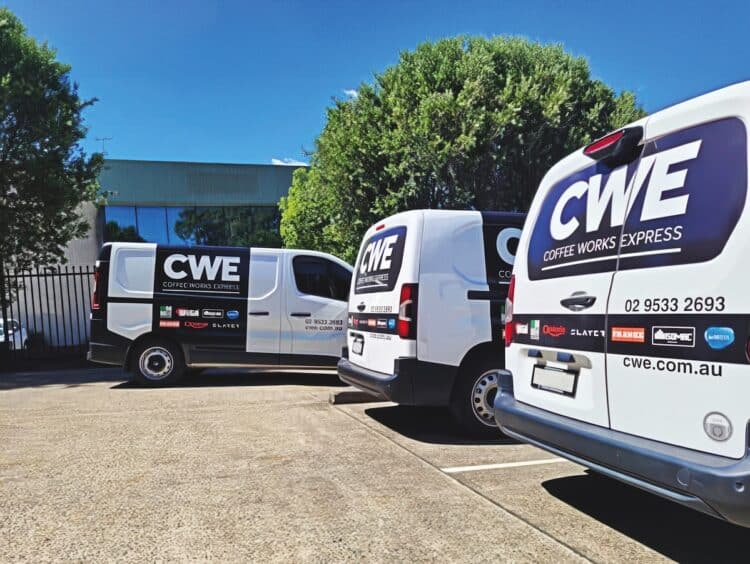
CWE has built its reputation on taking a complete service approach. From importing premium coffee systems and installing them through to after-sales care, the company offers preventative maintenance schedules, rapid response times and guidance on correct filtration systems for each location.
The company’s network of trained technicians and contractors operates across Australia, offering on-site servicing and after-hours technical support. That reach means café owners can depend on assistance wherever they are located.
In tandem with fast service response, CWE has access to premium authentic spare parts and manufacturer support across Wega, Astoria, Storm, Mazzer, BNZ, Isomac, Frake, Slayer and CMA-made espresso machines and grinders.
The company also invests in training and education. For cafés that want to implement best practice, training is just as crucial as good equipment. A barista who understands how the machine works can identify issues early and prevent them from escalating. This practical knowledge saves money and ensures that maintenance becomes part of daily workflow rather than an afterthought.
Technicians at CWE work alongside baristas and managers, showing them the right cleaning methods and maintenance schedules. Drawing on Natalie’s long background in barista training and Michele’s technical expertise built in the coffee industry, the team understands the operational pressures of a busy café and delivers solutions for specific needs.
Natalie says that if baristas and café owners care for their coffee machines through daily care routines and regular service bookings, their coffee quality will remain high and operations will thrive.
“Our goal is to keep machines performing at their best so customers can serve consistent, high-quality coffee every day,” says Michele.
As the industry continues to evolve, cafés that prioritise maintenance will stand out for all the right reasons. Well-cared-for machines deliver stable pressure and temperature, which in turn deliver the perfect espresso shot.
“Great coffee doesn’t just come from great beans, it comes from well-maintained equipment,” says Michele.
“Treat your coffee machine like the heart of your business, because it is.”
For more information, visit coffeeworksexpress.com.au
This article appears in the December 2025 edition of BeanScene. Subscribe HERE.