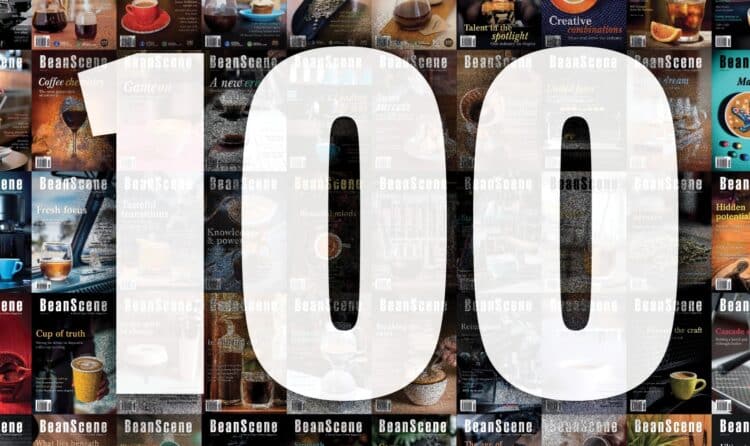
As BeanScene celebrates its 100th issue, some of the people who’ve helped shape the Australasian coffee industry share their greatest achievements, memories of the magazine, and predictions for the future.
A lot happened in 2009. Barack Obama became the 44th President of the United States, Bitcoin was launched, Roger Federer set a Grand Slam record of 15 wins, the film Avatar was released after 14 years in development, and – perhaps most importantly of all – the inaugural issue of BeanScene was printed.
In the 16 years that have passed since the magazine was adopted by Prime Creative Media, 100 issues have been published covering the evolution of coffee, its role in the café scene, and the community spirit of Australasia’s coffee industry.
From Sasa Sestic (2015) and Anthony Douglas (2022) being crowned World Barista Champions and Caleb Cha winning the World Latte Art Championship (2015), to navigating the changing café landscape through COVID-19, and the perpetual cycle of drinks trends (who’s for a charcoal latte or bulletproof coffee?), BeanScene has documented the region’s unique café culture that’s inspired many others across the world.
Christine Clancy, one of the early editors of the magazine, says from the start the team at Prime knew getting the coffee scene’s thought leaders and innovators to contribute to the articles was going to be one of the keys to BeanScene’s success.
“As journalists, we didn’t need to know huge amounts about the industry, we just had to be good storytellers. We were there to tell the stories of the people doing incredible things and help share their knowledge,” she says.
“A lot of the elements that are still in the magazine today were there from the beginning, such as Knowledge Leader interviews, Espresso Yourself latte-art tutorials, and Café Scene profiles.”
Over time, the magazine’s readership has grown organically, with café owners right across Australia and New Zealand subscribing to the print editions and weekly digital newsletter. According to Sarah Baker, who worked alongside Christine and then went on to edit the magazine for more than a decade, being closely linked with the competition scene contributed to building a loyal legion of readers.
“Being involved in the barista competitions in the early days helped to connect with the industry. We really immersed ourselves in the scene and got to meet a lot of café operators and aspiring ones, which helped us understand what the audience wanted and how we could cater to their needs in an informative way,” Sarah says.
When Prime Creative Media launched the Melbourne International Coffee Expo (MICE) in 2012, barista competitions and connection with specialty coffee roasters were a core part of the industry tradeshow. This led to the expo hosting the World Barista Championships in 2013 and again in 2022.
While the magazine has tracked many of the great changes in the industry over the past decade and half – from the introduction of grind-on-demand technology, the rise of automation, and the impact of banning smoking in outdoor seating areas of cafés – Sarah says the people that continue to pour their passion into Australian coffee culture are at the heart of its success and longevity.
“I remember writing the Café Scene profiles for Single O and The Grounds of Alexandria’s first venues almost 15 years ago. To see them still growing today is amazing,” she says.
“The most rewarding part is seeing the growth of the industry and the people we represent. I’ve been fortunate to see piles of BeanScene on café bench-tops, receive letters and now social posts from those proud to see their face in the magazine, and baristas who have gone on to forge their own careers and achieve incredible things. This includes owning their café, shop expansion, releasing their own line of products, and even travelling the world as industry ambassadors.
“I’ve watched people, brands and products grow, and BeanScene has been a proud vehicle and platform to help so many navigate their dreams.”
Kirby Burton
Do you remember the first time you picked up BeanScene?
It was at The Maling Room café in Melbourne, where I worked when first starting out in the industry, learning from Andrew Lew of Symmetry Coffee Roasters. I was struck by how connected the magazine felt to what was happening on the ground in cafés and roasteries.
How has the magazine contributed to the coffee industry?
BeanScene has been a central voice in documenting trends, celebrating professionals, and sharing technical knowledge. It’s helped elevate standards and connected the community across Australia.
Your biggest career milestones?
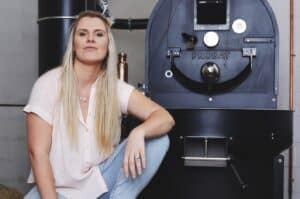
Winning my first Latte Art Smackdown in Sydney in 2009 gave me a huge boost of confidence and the drive to keep improving. Going on to win the Australian Latte Art Championship in 2011 was another major highlight, especially as latte art was evolving so quickly at that time. And, of course, moving back to my hometown of Coffs Harbour to open my first roastery, STOKA, along with an espresso bar, was a dream come true.
What are you up to now?
Currently, I’m a stay-at-home mother to two wonderful daughters. We live on 28 acres in the beautiful Coffs Harbour region, where farm life keeps me busy, grounded, and connected to nature every day.
Predictions for the future of coffee?
I think we’ll continue to see more focus on ethical sourcing and environmental impact, even greater demand for traceability, and continued innovation in how coffee is brewed, served, and consumed.
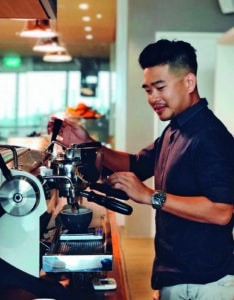
Ryan Tan
Favourite memory contributing to BeanScene?
It was around July 2011, just after my first World Latte Art Championship in Maastricht. That was also my first year competing in the Barista Championships and I had the honour of representing Singapore on the world stage in both competitions. I was asked to contribute an article on my journey and competition experience.
Why is it important to have an industry magazine?
It’s important for people to share so the industry can move forward together, as ultimately we all want the same outcome: better coffee for our customers.
What are you doing now?
I’m currently coaching a barista in Singapore for the National Barista Championships. I also judge barista, Coffee in Good Spirits, and latte art championships across the region.
The most significant developments in coffee over the past 15 years?
The different processing methods we have seen in the past few years, such as anaerobic, cryogenic, lactic fermentation, and double fermentation, have really changed the way coffee tastes. This has unlocked a whole new world of opportunities for flavour potential, which I find really exciting for our industry.
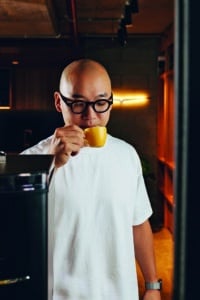
Caleb Cha
Do you remember the first time you picked up BeanScene?
I was working in Melbourne and still relatively new to the specialty scene. I remember picking up BeanScene and thinking, “Wow, there’s a whole world behind this industry”.
I sent one of my photos to be included in Espresso Yourself and it ended up being featured. That moment made me realise coffee was more than just a job – it was the start of my dream to one day become the World Latte Art Champion.
Favourite memory of contributing to the magazine?
When my colourful butterfly latte art was featured on the front cover after I won the World Latte Art Championship. That design was something really special to me, it represented not just skill but storytelling through colour. Working with Sarah was such a fun and collaborative experience.
Your biggest career milestones?
Becoming the World Latte Art Champion in 2015 was a life-changing moment. However, beyond that, opening my own café and roastery, Tone Coffee Roasters, has been a significant milestone.
Creating signature drinks like the Tiger Bomb and seeing them resonate with people reminds me why I fell in love with this industry in the first place.
What are you doing now?
I’m running Tone Coffee Roasters, with two locations in Melbourne – one in Prahran and another in North Melbourne, which is currently halfway through construction. I’m heavily involved in roasting, quality control as a Q Grader, developing new drink concepts, and training our staff in sensory analysis and customer service. I’ve stepped back from judging competitions due to my business commitments, but I hope to return to the judging table soon.
Nadine Norman
Favourite memory contributing to BeanScene?
I’ve been fortunate to have many opportunities to contribute over the years. My first experience was around 2011, fresh off the back of a competition and still very green to the industry. That was when I first met Sarah. Even in her early days with BeanScene, she made the experience so engaging and comfortable.
How has the magazine contributed to the coffee industry?
BeanScene creates a platform for connection through thoughtful storytelling. It links every part of the coffee supply chain – from manufacturers and growers to grassroots cafes. The magazine is both an educational resource and a showcase of industry progression, innovation, and insight.
BeanScene has created a legacy for the coffee industry, a publication we can look back on and see how far we have come.
What are you doing now?
I’ve been lucky to call ECA home for the past 13 years. As Marketing Manager, I lead brand strategy and campaign executions for the brands we represent.
Predictions for the future of the industry?
We will continue to see coffee culture evolve, shaped by technology, changing consumer habits, and a desire to keep exploring the craft.
We’re already seeing trends that will shape the future.
The continued advancement of AI is likely to bring major changes to coffee processes at every step of production – unearthing new ways to develop and explore techniques from origin through to pouring coffee into the cup.
There are no limits in coffee. When you see what the amazing minds in our industry create and how they conceive ideas, I think we are in for an exciting path ahead.
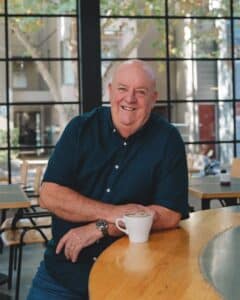
Lance Brown
Favourite memories of contributing to BeanScene?
In 2010, I became a certified coffee judge for latte art and “possibly” helped and contributed to drive some of our long-term success in this part of our industry. With the help of BeanScene, I became a subject matter expert for all things coffee and milk related and a regular contributor to the magazine.
Your biggest career milestones?
I’ve been in the industry since 1998 so it’s hard to pinpoint just one. I feel very privileged to be a part of the industry and I’m still just as passionate about it.
From coffee to milk and back to coffee, and being head judge of Australia and then judging at World Championships in Australia, France, China and, Sweden, it’s been a great ride.
What are you doing now?
I’m Director of International sales at Nomad Coffee Group, responsible for brands such as Veneziano, Coffee Hit , Sourced and, of course, Black Bag Roasters.
The most significant developments in coffee over the past 15 years?
For me, it’s the coffee itself. We no longer just accept mediocre offerings. We want local, we want fresh, and as a customer I want my coffee to be well made and to be consistent every day.
Ian Callahan
Do you remember the first time you picked up BeanScene?
It was at a delightful coffee roastery in Adelaide called The Coffee Barun. I was a little coffee nerd stumbling down the rabbit hole of specialty coffee, eager to pick up anything I could find.
How was the magazine contributed to the coffee industry?
BeanScene has been an absolute stalwart of the specialty coffee community since its inception. In the early days we didn’t have Instagram and YouTube, so finding a curated list of the latest and greatest was so valuable. As the magazine grew and evolved – along with online resources – it has always been an incredible resource for new baristas, home coffee enthusiasts, and also industry buffs.
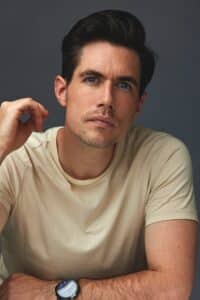
Your biggest career milestones?
From the early days on the barista competition circuit with stalwarts like Scottie Callaghan, Anne Cooper, Hazel de Los Reyes, and David Makin, to judging and finally opening my own coffee businesses, it’s all felt pretty special.
I feel my biggest milestone is still yet to come – involving tea – but that’s a conversation for another time.
What are you up to now?
I’ve been busy acting – of all things – but this year I’ve moved back to Melbourne to help open and steer the ship on Kolkata Cricket Club for Blackstone Equity. It’s been great getting back into the rhythm of the city and (re)discovering its vibrant coffee and hospitality scene.
Natalie Kollar
How has BeanScene contributed to the coffee industry?
The magazine has long been a hub for industry news, community building and highlighting the industry in Australia. Having a publication for the coffee sector is very important, as it provides a platform to showcase, highlight, and inform.
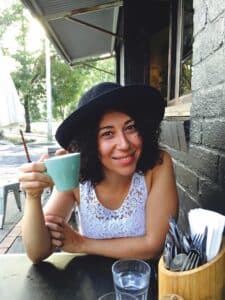
Biggest career milestones?
At Coffee Works Express (CWE), we are approaching 30 years in the industry and continuing to build our brand portfolio and provide the very best in coffee equipment to our sector.
Predictions for the future of the coffee?
Coffee still has a huge amount of growth potential in Australia and New Zealand – not only do we love it, but we also value and appreciate its potential. We still see huge potential in the domestic market, with the quality of domestic units improving every year.
I think there’ll also be a move into the higher end of quality espresso machines. The extraction capabilities and barista control available is increasing output quality and capacity.
Shinsaku Fukayama
Favourite memory of contributing to BeanScene?
I’ve been interviewed a lot for the magazine, but the most memorable time was in June 2020 for the article Shinsaku Fukayama shares the secret to his success.
What are you up to now?
I established my own company in 2020 and now have four venues in Osaka, Japan. Two stores are under the Barista Map brand, one is a roastery called BAISEN, and there’s onigiri and coffee store KOME MAME.
We also have a barista school, where we not only develop skills and knowledge but also focus on mindset. This is very important in the process of achieving your goals by working backwards. I am also preparing to open store in Australia, so stay tuned.
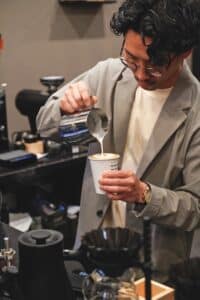
The most significant developments in coffee over the past 15 years?
There has been a dramatic increase in the popularity of specialty coffee, with a focus on high-quality beans, unique flavour profiles, and artisanal brewing methods.
What’s more, advances in coffee brewing technology, including precision brewing devices and smart coffee machines have made it easier for consumers to brew high-quality coffee at home. Additionally, apps for tracking coffee freshness and ordering have become more common.
These developments reflect broader shifts in consumer preferences, environmental awareness, and technological innovation within the coffee industry.
Scottie Callaghan
Do you remember the first time you picked up BeanScene?
My career started simply, I was one of the baristas working at Toby’s Estate in Sydney. I remember picking up the magazine in those days and reading about the barista champions and I was inspired to be like them – I dreamt that one day it would be me.
Memories of contributing to the magazine?
After I’d won the Australian Barista Championship, BeanScene reached out to me to contribute a column where I would write a topical piece each issue. The first one I wrote was ripped to pieces by John Murphy who was looking after the magazine at the time, but that experience inspired me to take the time to learn to write, which has been hugely helpful in my career.
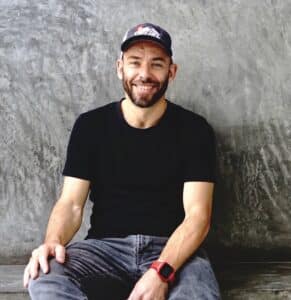
What are you up to now?
On the back of my profile as a Barista Champion, I was offered a job in Hong Kong. While I was at that company, I dreamt up the idea for FINEPRINT, which came to life in 2016. It started as a single coffee shop, but almost 10 years on we’re about to open our tenth store at Hong Kong Airport and have an in-house roastery.
The most significant developments in coffee over the past 15 years?
The development of coffee at origin has been incredible to see. Over that time, there’s a huge amount of work by producers to improve and innovate to create an incredible product.
And the role of the barista has shifted greatly – it’s completely different from when I started out 20 years ago. I remember a conversation while I was at Seven Miles about whether it would become mainstream in Australia for cafés to serve a blend and a single origin – we said it would never happen.
The industry has grown so much and it’s been amazing to see.
Emily Oak
Do you remember the first time you picked up BeanScene?
I think I may have contributed to the first edition. In 2008, I had joined the World Coffee Championships board of directors and was quite heavily involved in barista competitions from then for a good few years. I’m pretty sure BeanScene ran a profile on me, which I thought was pretty hilarious at the time.
What are you up to now?
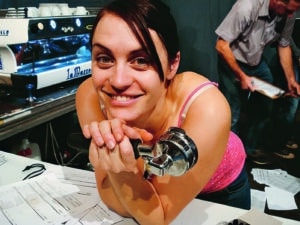
After I retired from my voluntary role at the World Coffee Championships in 2013, I joined ST. ALi as the roaster’s first employee outside of Victoria. Since then, I’ve looked after the brand here in New South Wales.
Watching the brand grow over those years has been pretty extraordinary. We’ve expanded nationally and internationally, and moved to a bigger new roastery in Port Melbourne. It’s all been fun.
Predictions for the future of coffee?
While there has been a lot of conversations about pricing, people are always going to drink coffee – no matter what. People may give up other everyday luxuries, but I don’t think they will give up coffee as it’s so ingrained in our culture.
I think the bigger challenge for the coffee industry will be the younger generations who, as well as drinking less alcohol, are drinking less coffee and are more conscious of their caffeine intake.
But overall, coffee’s got better and our customer base has got more educated. My favourite thing is when people come in with a complicated coffee order because it means they understand what we do and what they like.
Instaurator
Do you remember the first time you picked up BeanScene?
Yes, I was President of Australian Specialty Coffee Association (ASCA). We had our first ever tradeshow in the Gold Coast and John Murphy and Brad Buchanan approached me about a new coffee magazine they were launching. The ASCA executive committee then agreed to collaborating.
How has the magazine contributed to coffee industry?
BeanScene has always had a very large international vision and has supported the local grassroots at the same time.
Your biggest career milestones?
Establishing ASCA as a non-profit organisation has enabled thousands of coffee professionals to grow and explore the wonderful world of coffee. I was also appointed Executive Director of the World Barista Championship in 2004.
What are you doing now?
I still have a very small hand in coffee retailing and probably always will. I’m now focused more on helping people grow spiritually.
The most significant developments in coffee over the past 15 years?
The growth of professional coffee tasters has been a major development. When I started in coffee in 1981, this was very rare.
Your predictions for the future of the coffee in Australia and New Zealand?
As long as it is focused on letting taste be our guide, it will prosper.
Craig Simon
Favourite memories of contributing to the magazine?
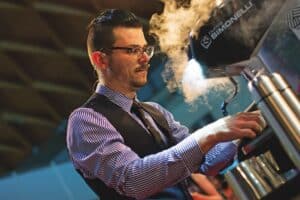
I won the Australian Barista Championship in 2012, so I know a lot of my contributions were around my presentations at competition. Along the way, there was also some commentary on trends and what coffee in the future may look like.
How has BeanScene contributed to the industry over the years?
It’s created a mouthpiece for people to discuss industry events and topical issues of importance, and been a focal point for a lot of cafés and baristas. It gives everyone an opportunity to see the industry as a whole within the country, which I think is as an important thing to recognise.
Biggest career milestones?
It’s hard to choose, but being three-time Australian Barista Champion and coming fourth in the World Championships is up there. I was also the first Q Grade instructor in the Southern Hemisphere, which led to me starting my business Criteria Coffee where we guide and assist people in learning roasting and sensory evaluation.
The most significant developments in coffee over the past 15 years?
Accessibility to knowledge has changed dramatically from when I started more than 20 years ago. To the best of my knowledge, at that time there was nowhere you could learn to roast – you had to get a job at a roastery to understudy someone. The understanding and skill at origin has also increased immensely, and the quality of green has improved enormously.
The equipment has moved on too. The consistency, accuracy and behaviour of all the brewing and grinding equipment has improved immeasurably.
Paul Jackson
Memories of contributing to the magazine?
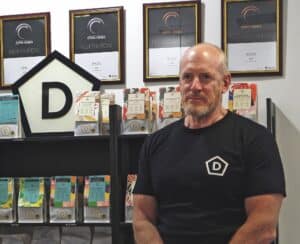
I started in the coffee industry in 1994 and went on to establish Dane Coffee Roasters in Sydney. When I was approached by BeanScene to contribute, I was running a barista training school and heavily involved in barista competitions. I wrote a column for about a year and each issue we would pick a subject and look at it from a training perspective.
Since the early days, BeanScene has been part of the DNA of the Australian café industry.
The most significant developments in coffee over the past 15 years?
When I first started training baristas, introducing the idea of weighing coffee was unimaginable for them. They would say, “Are you kidding? We’re in a hurry here in a busy environment”. Back then, we were trying to instil discipline to raise the standards of quality and that’s obviously something we’ve seen improve across the board in the past few decades.
Previously, people didn’t like to share their industry knowledge, but now that’s changed. I shared everything I knew because the more you share the more you get back. Today, even some home baristas have a huge amount of knowledge of coffee and are very passionate about it.
Predictions for the future of coffee?
It’s no revelation to say AI is going to come into coffee machines. It’s sort of there already with telemetry systems. However, when Starbucks came out with fully automatic machines they failed miserably – customers still wanted to interact with a barista – so I don’t think it’s quite so straight forward.
Coffee pricing is another area I think we’ll see change in. Prices for a cup of coffee will go up, there’s a big drive to make it a little more valuable, but not to the levels the rest of the world has seen.
Craig Dickson
Do you remember the first time you picked up BeanScene?
I picked up my first issue at the original First Pour Café in Abbotsford. I believe we even advertised in one of the very first editions. I clearly recall it featured reviews of some of our wholesale café partners. That ad was a game-changer for Veneziano in the early days. We saw an immediate and positive response that generated some of our first wholesale leads.
One of those early editions also profiled my Co-Founder, Rocky. That feature now lives proudly framed on his office wall and is a great reminder for us both of where it all began.
How has BeanScene contributed to the industry over the years?
BeanScene has played a huge role in positioning Melbourne, and Australia, as a global leader in specialty coffee. Our industry is tight-knit and collaborative, and BeanScene has helped amplify that by showcasing our people, our stories, and our progress.
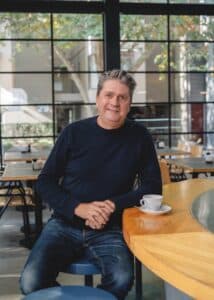
Biggest career milestones?
Serving as ASCA President, helping to bring the World Barista Championship to Melbourne, being the first business to bring specialty Robusta to Australia, and growing Nomad Coffee Group into $100 million company – among many others.
What are you up to now?
I’m still deeply involved in the Nomad Coffee Group as CEO, with a strong focus on international growth. I’m also still passionate about coaching and love supporting our competitors through training, that part of the craft never gets old for me.
Predictions for the future of coffee in Australia and New Zealand?
Home consumption will continue to grow and we’ll see more premium coffee options hitting supermarket shelves. Cold beverages like iced coffee and matcha will continue to trend, while innovation will accelerate – from pods and drip coffee to new ways of consuming coffee especially on-the-go in convenience formats.
Automation will become more mainstream – we’re already seeing this with technologies like Eversys. And globally, we’ll continue to see strong demand in line with consumption, meaning we’re unlikely to see long-term relief in green coffee pricing any time soon.
This article appears in the August 2025 edition of BeanScene. Subscribe HERE.